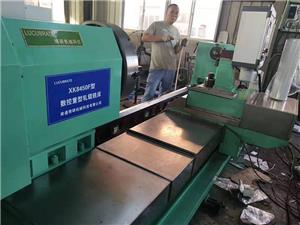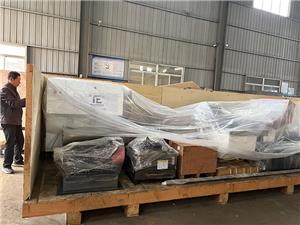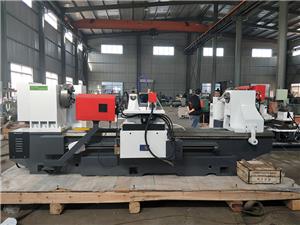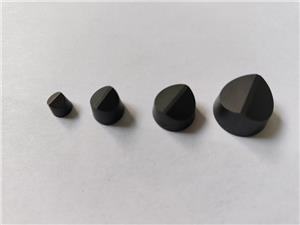
Seu sistema de entalhe por rolos está lhe custando caro?
Os compradores nesses segmentos geralmente avaliam as máquinas com base na repetibilidade, no tempo de troca de ferramentas e na integração com as linhas de perfilagem existentes. A NANTONG LUCUBRATE MACHINERY TECHNICAL LTD. trabalha com integradores de linhas de perfilagem e diretamente com fabricantes para adequar a configuração da máquina à geometria do perfil e ao volume de produção. Relacionamentos de longo prazo com fornecedores de componentes e controles garantem a disponibilidade consistente de peças de reposição, o que é importante para as equipes de compras que avaliam o custo total de propriedade, e não apenas o preço de compra.
Perguntas frequentes

Q1: Que nível de repetibilidade podemos esperar realisticamente em seções de bitola grossa?
Em equipamentos com manutenção adequada e sistema de referência servo, é possível obter uma precisão de ± 0,15 mm a 0,25 mm em perfis de grande espessura, dependendo da rigidez da seção e do manuseio. O segredo é a referência durante o processo, em vez de depender de um batente fixo. Solicite um estudo de capacidade para o seu perfil específico, e não para uma peça de demonstração.
Q2: Como a marcação integrada lida com superfícies profundas ou curvas?
A tecnologia de marcação é selecionada com base nas condições da superfície e na profundidade necessária. Para aplicações de alta resistência, a cabeça de marcação segue o contorno da superfície programado e o controle compensa a distância. Se o seu perfil apresentar curvatura significativa, forneça seções de amostra durante a especificação para que a estratégia de marcação seja validada antes do envio.
P3: Qual é o tempo real de troca de ferramentas?
A troca rápida de ferramentas com fixação pré-ajustada geralmente reduz o tempo de troca para 15 a 25 minutos para uma família de perfis. A variável mais importante é a familiaridade do operador. A maioria das oficinas atinge o tempo mínimo após algumas semanas de produção. Recomendamos uma demonstração da troca com suas próprias ferramentas como parte do processo de aceitação.
Q4: A máquina pode ser integrada à nossa linha de produção e ao nosso sistema MES existentes?
Sim. O controle suporta protocolos industriais padrão para comunicação entre linhas de produção e dados de produção. Para integração com MES, a abordagem prática é definir os pontos de dados necessários, como contagem de peças, ID do programa e registros de posição de entalhe, e validá-los durante o comissionamento. Evite presumir integração completa sem uma especificação de interface por escrito.
Q5: Como é, na prática, a manutenção ao longo de cinco anos?
A manutenção prevista inclui itens de desgaste normal nas ferramentas, verificação periódica da calibração dos servoeixos e lubrificação padrão. O principal fator de custo é o prazo de entrega das peças de reposição; portanto, o departamento de compras deve confirmar a disponibilidade de peças local ou regional e solicitar uma lista de peças de reposição recomendadas juntamente com a cotação.
Conclusão e Chamada à Ação
Se o seu sistema de entalhe de rolos depende de posicionamento manual, estações de marcação separadas e longas trocas de ferramentas, o custo é real e recorrente. Uma máquina CNC de entalhe e marcação de rolos de alta resistência transforma a economia do setor, tornando a precisão independente da sensibilidade do operador e eliminando completamente a operação de marcação secundária. Os exemplos acima mostram como isso se traduz na prática: refugo inferior a 1%, trocas de ferramentas em menos de 20 minutos e prazos de entrega medidos em dias, em vez de semanas.
Se você deseja avaliar isso em relação aos seus próprios perfis, o próximo passo é uma análise técnica, em vez de uma reunião de vendas. Solicite o white paper técnico sobre entalhe e marcação de rolos para serviço pesado ou peça para falar com um engenheiro de vendas sobre um estudo de capacidade para a sua seção. Leve seus desenhos de perfil e seus dados atuais de refugo. A conversa será mais útil dessa forma.
For accuracy drift, the solution is in-process referencing. The machine locates the part against a servo-controlled datum, not a hard stop, and compensates for measured position before the notch is cut. Marking is performed in the same setup, so the mark and the notch share a coordinate system. The result is repeatability that does not depend on operator feel.
For the marking bottleneck, the solution is eliminating the secondary operation entirely. Marking is programmed as part of the notch cycle, whether the requirement is a part number, a weld symbol, or a traceability code. There is no stencil, no separate station, and no queue.
For changeover, the solution is quick-change tooling and a control that accepts parametric programs. When a profile changes, the operator selects the program and confirms the tooling, and the machine handles the rest. Shops that move from two-hour changeovers to under twenty minutes stop batching jobs, which reduces inventory and shortens lead times.
The table below summarizes the contrast between a conventional setup and a CNC roll notching and marking machine.
| Factor | Conventional Setup | Heavy Duty CNC Roll Notching and Marking Machine |
|---|---|---|
| Notch locating | Hard stops, manual gauging | Servo datum with closed-loop feedback |
| Marking | Secondary station, stencils | Integrated in the same cycle |
| Changeover | 1.5 to 2 hours | Typically under 20 minutes |
| Scrap rate | 2 to 5 percent common | Below 1 percent achievable |
| Programming | Offline CAM, specialist dependent | Parametric, operator editable |
Customer Cases
The following cases are representative of how shops have applied this technology. Names are fictionalized, but the operating conditions and measured results reflect the type of gains reported in heavy-duty roll forming environments.
Case 1: Midwest US Structural Roll Former
Dave Kowalski, plant manager at a structural roll former in Indiana, was running two shifts on a line producing heavy gauge purlins. Notch scrap was 4.1 percent. After installing a heavy duty CNC roll notching and marking machine from NANTONG LUCUBRATE MACHINERY TECHNICAL LTD., scrap dropped to 0.7 percent within three months. Changeover time fell from 95 minutes to 18 minutes. Dave's assessment: "We stopped inspecting every part because we finally trusted the process. That alone freed up two inspectors for other work."
Case 2: German Automotive Tier Supplier
In Baden-Wurttemberg, a tier supplier producing roll-formed seat frame components needed traceability marking on every part. The secondary marking station was a bottleneck during model changeovers. After integrating marking into the notching cycle, the supplier reduced work-in-process between operations by 62 percent and eliminated one full handling step per part. Procurement manager Anja Fischer noted: "The marking is no longer a separate conversation. It happens with the notch, and the data is in the same record."
Case 3: UK Racking Manufacturer
A racking manufacturer in the West Midlands was batching jobs to avoid tooling changes, which pushed lead times to six weeks on custom uprights. With quick-change tooling and parametric programming, changeover dropped to 15 minutes and batch sizes fell by half. Lead time on custom orders fell to 19 days. Operations director Mark Ellison said: "We used to plan around the machine. Now we plan around the customer."
Case 4: Canadian Agricultural Equipment Builder
In Manitoba, an agricultural equipment builder was notching thick-gauge frame rails and marking weld symbols by hand. Hand marking caused rework when symbols were misread. Integrated CNC marking eliminated the rework entirely and reduced weld fixture rework by 34 percent. Fabrication supervisor Renee Tremblay commented: "The welders stopped asking which way the symbol faced. That sounds small until you count the rework hours."
Case 5: Australian Steel Fabricator
A fabricator in Victoria producing heavy-duty conveyor frames struggled with accuracy drift on long sections. Servo referencing on the new machine held notch position within plus or minus 0.15 mm over a full shift. Scrap fell from 3.2 percent to 0.6 percent, and the shop eliminated a dedicated sorting operation. Production manager Liam O'Connor said: "We measured it for a month before we believed it. The drift was simply gone."
Applications and Partnerships
Heavy duty CNC roll notching and marking machines are used wherever roll-formed or long structural sections require locating features and identification. Common applications include:
Structural purlins and girts with end notches and part marking; racking uprights and beams requiring notch patterns and load labels; automotive seat frames and chassis components needing traceability marks; agricultural frame rails with weld symbols; conveyor and material handling frames with mounting notches; and solar mounting rails with batch and traceability codes.
Buyers in these segments typically evaluate machines on repeatability, changeover time, and integration with existing roll forming lines. NANTONG LUCUBRATE MACHINERY TECHNICAL LTD. works with roll forming line integrators and directly with fabricators to match machine configuration to profile geometry and production volume. Long-term supply relationships with component and control suppliers support consistent spare parts availability, which matters to procurement teams evaluating total cost of ownership rather than purchase price alone.
FAQ
Q1: What repeatability can we realistically expect on heavy gauge sections?
On properly maintained equipment with servo referencing, plus or minus 0.15 mm to 0.25 mm is achievable on heavy gauge profiles, depending on section stiffness and handling. The key is in-process referencing rather than relying on a fixed stop. Ask for a capability study on your actual profile, not a demo part.
Q2: How does integrated marking handle deep or curved surfaces?
Marking technology is selected based on surface condition and depth requirement. For heavy-duty applications, the marking head follows the programmed surface contour, and the control compensates for standoff. If your profile has significant curvature, provide sample sections during specification so the marking strategy is validated before shipment.
Q3: What is the actual changeover time, including tooling?
Quick-change tooling with preset clamping typically brings changeover to 15 to 25 minutes for a profile family. The honest variable is operator familiarity. Most shops reach the low end after a few weeks of production. We recommend a changeover demonstration with your own tooling as part of acceptance.
Q4: Can the machine integrate with our existing line and MES?
Yes. The control supports standard industrial protocols for line handshaking and production data. For MES integration, the practical approach is to define the data points you need, such as part count, program ID, and notch position records, and validate them during commissioning. Avoid assuming full integration without a written interface specification.
Q5: What does maintenance actually look like over five years?
Expected maintenance includes normal wear items on tooling, periodic calibration verification of servo axes, and standard lubrication. The larger cost driver is spare parts lead time, so procurement should confirm local or regional parts availability and request a recommended spares list with the quotation.
Conclusion and Call to Action
If your roll notching setup depends on manual locating, separate marking stations, and long changeovers, the cost is real and it is recurring. A heavy duty CNC roll notching and marking machine changes the economics by making accuracy independent of operator feel and by removing the secondary marking operation entirely. The cases above show what that looks like in practice: scrap below 1 percent, changeovers under 20 minutes, and lead times measured in days rather than weeks.
If you want to evaluate this against your own profiles, the next step is a technical review rather than a sales call. Request the heavy-duty roll notching and marking technical white paper, or ask to speak with a sales engineer about a capability study on your section. Bring your profile drawings and your current scrap data. The conversation will be more useful that way.
Terças e travessas estruturais com entalhes nas extremidades e marcação de peças; montantes e vigas de estantes que requerem padrões de entalhe e etiquetas de carga; estruturas de assentos automotivos e componentes de chassis que necessitam de marcas de rastreabilidade; longarinas de estruturas agrícolas com símbolos de solda; estruturas de transportadores e movimentação de materiais com entalhes de montagem; e trilhos de montagem solar com códigos de lote e rastreabilidade.